
Digital Innovation for the Advanced Management of Large-Scale Photovoltaic Power Plants
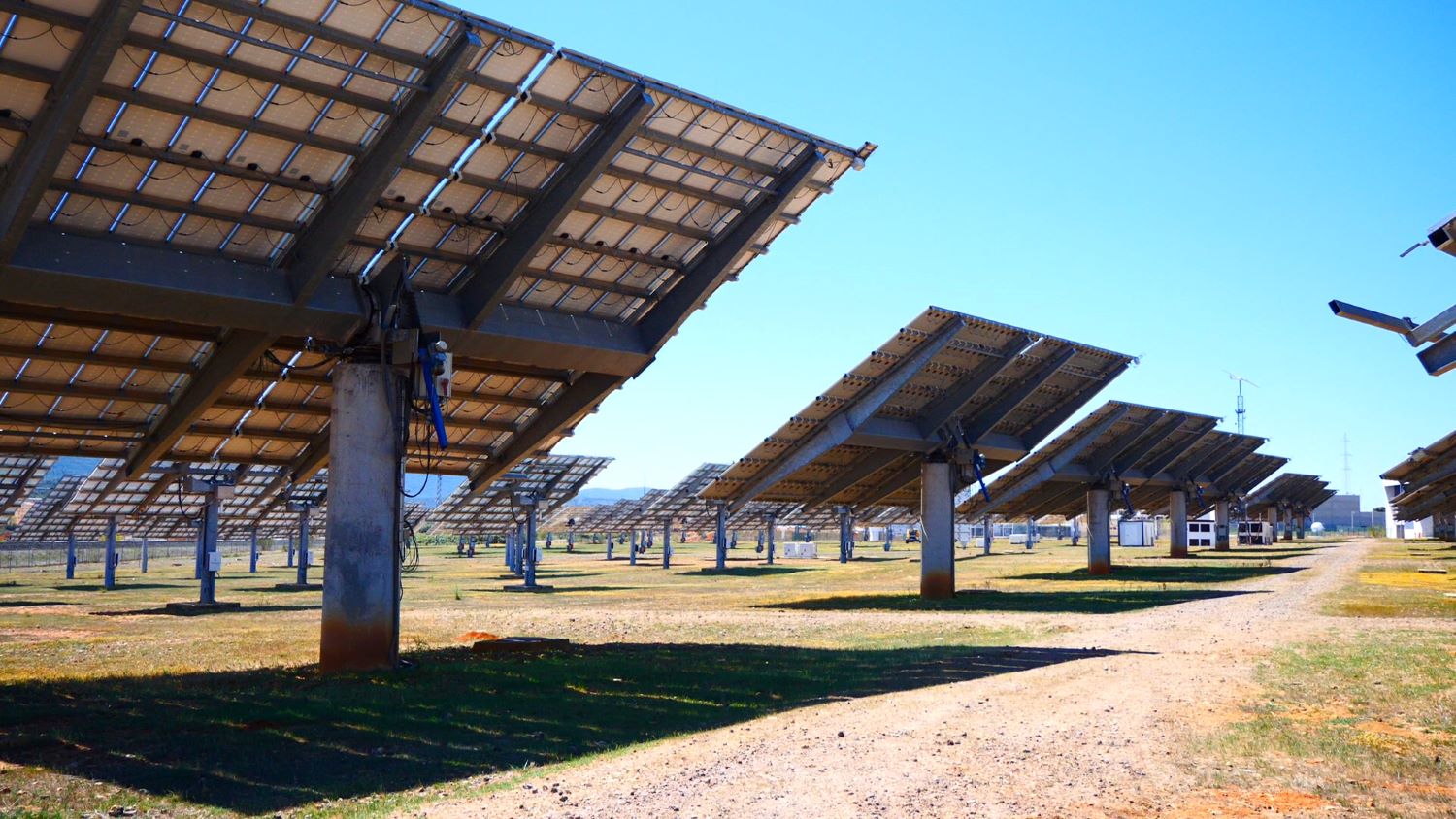
INDAGA SOLAR (2022–2023), coordinated by Skylife Engineering, implemented technologies such as the Internet of Things (IoT), Artificial Intelligence (AI), and computer vision to optimise the operation and maintenance (O&M) of photovoltaic power plants, improving performance, safety, and energy efficiency.
The Project
Context and Challenges
The photovoltaic industry has experienced sustained growth in recent years, making the sector a key contributor to achieving the economic, social, and territorial objectives established at both national and European levels. As a result, there is a growing need to drive new research and innovation that will further strengthen the sector's competitiveness and, consequently, maximise the economic, social, and territorial benefits it brings to society.
To address these challenges, and in line with both national and European priorities—including the European Union's 2030 Agenda for Sustainable Development and national energy transition objectives—the project aims to optimise electricity generation in large-scale photovoltaic power plants through the application of disruptive technologies.
Our Approach
INDAGA SOLAR is an industrial research project designed to digitalise and transform the operational processes currently used in the photovoltaic industry. The project investigates and evaluates emerging Industry 4.0 technologies—including Digital Twins, Cloud Computing, Artificial Intelligence, distributed IoT sensors, computer vision, and solar energy forecasting algorithms—that can be applied to and integrated into photovoltaic plant operations.
Based on this research, new operational procedures are developed using these emerging technologies, followed by technological validation and evaluation through a pilot demonstrator to assess the benefits of integrating the solutions with the greatest improvement potential.
The project's objective is to strengthen the Spanish photovoltaic sector by sharing the advances and results achieved while aligning current operational practices with the Industry 4.0 strategy. This lays the foundation for processes that deliver higher quality, improved performance, and enhanced safety compared with those currently available.
The project goes beyond the simple digitalisation of existing operations. Through research, technology assessment, evaluation of proposed improvements, and solution development, it seeks to transform operational processes and demonstrate the benefits of applying these innovations to the photovoltaic sector, improving quality, performance, safety, and reducing the environmental footprint associated with plant operations.
Key Objectives
- Improve performance, quality, and safety in photovoltaic O&M procedures while increasing the competitiveness of the PV sector.
- Drive the digital transformation of the photovoltaic sector, contributing to the objectives of the energy transition, sustainable development, and climate neutrality.
- Enable intelligent decision-making for photovoltaic operation and maintenance.
- Forecast solar resources in both the short and long term to optimise photovoltaic plant operations.
- Validate the proposed technologies, measure results, and evaluate improvements within a real Industry 4.0 production environment.
 The Solution
Development of a modular and interoperable cloud-based platform that optimises electricity generation by improving the Operation and Maintenance (O&M) of photovoltaic power plants. Within the framework of the project, the platform has been designed around the Industrial Internet of Things (IIoT) concept to standardise the plant and environmental data processing modules, enabling the planning of preventive and corrective maintenance interventions based on the recommendations provided by a Decision Support System (DSS).
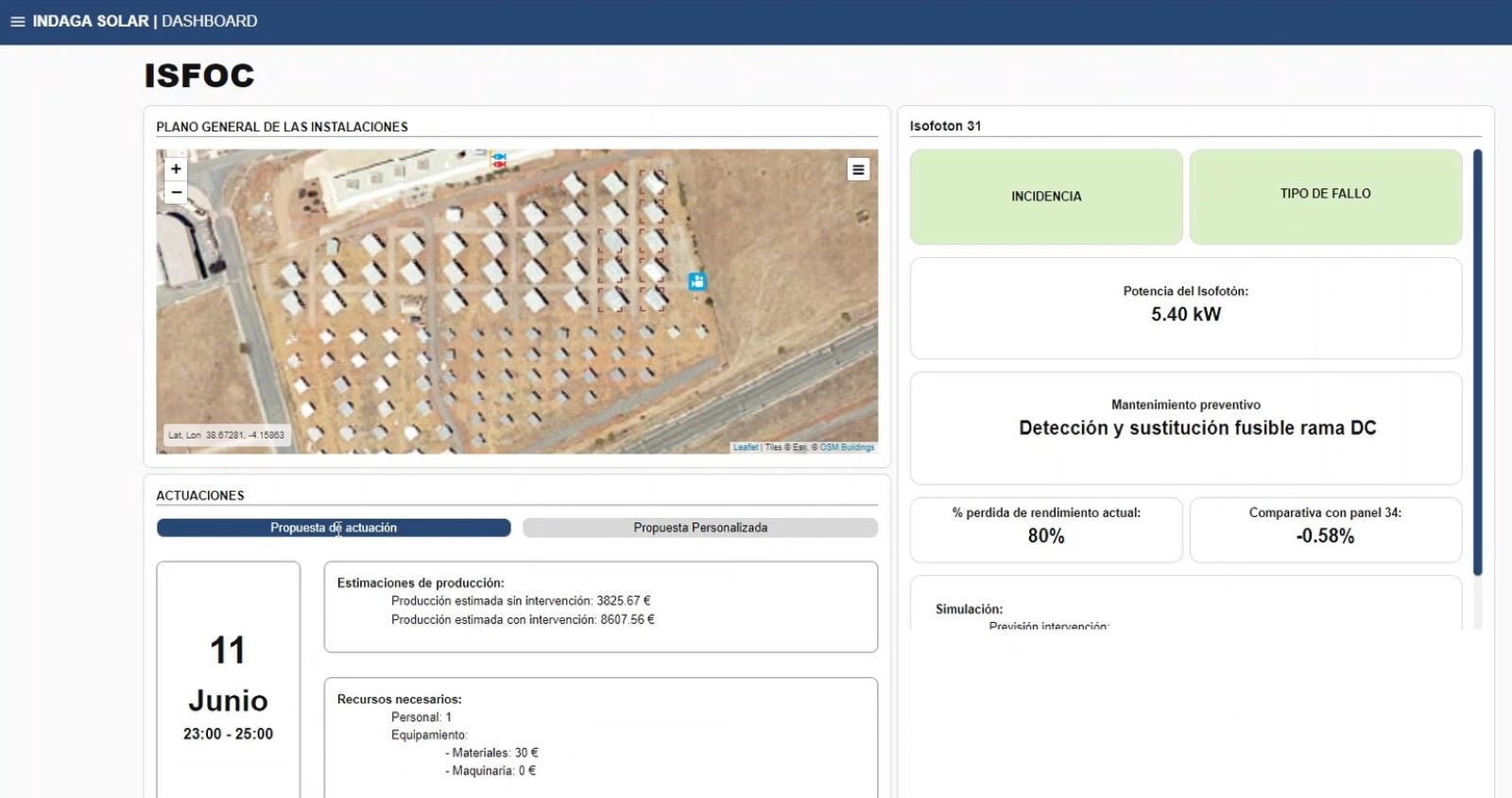
This module makes use of the results generated by the solar resource forecasting modules, the plant's intrinsic parameters (soiling sensors, weather station, voltage and electrical parameters, etc.), and early fault detection in photovoltaic panels to recommend incident management actions to the user based on economic performance criteria, primarily linked to production optimisation according to estimated generation and the market price of electricity per MWh.
From the perspective of sensors acting as IoT Agents, the platform architecture is based on an edge computing strategy at the lower level. This means equipping the most advanced sensors with functional intelligence to interpret the data they collect, while, at the upper level, a dedicated Decision Support System (DSS) module provides recommendations based on actions related to production optimisation (Operation) or Maintenance, in both its preventive and corrective forms.
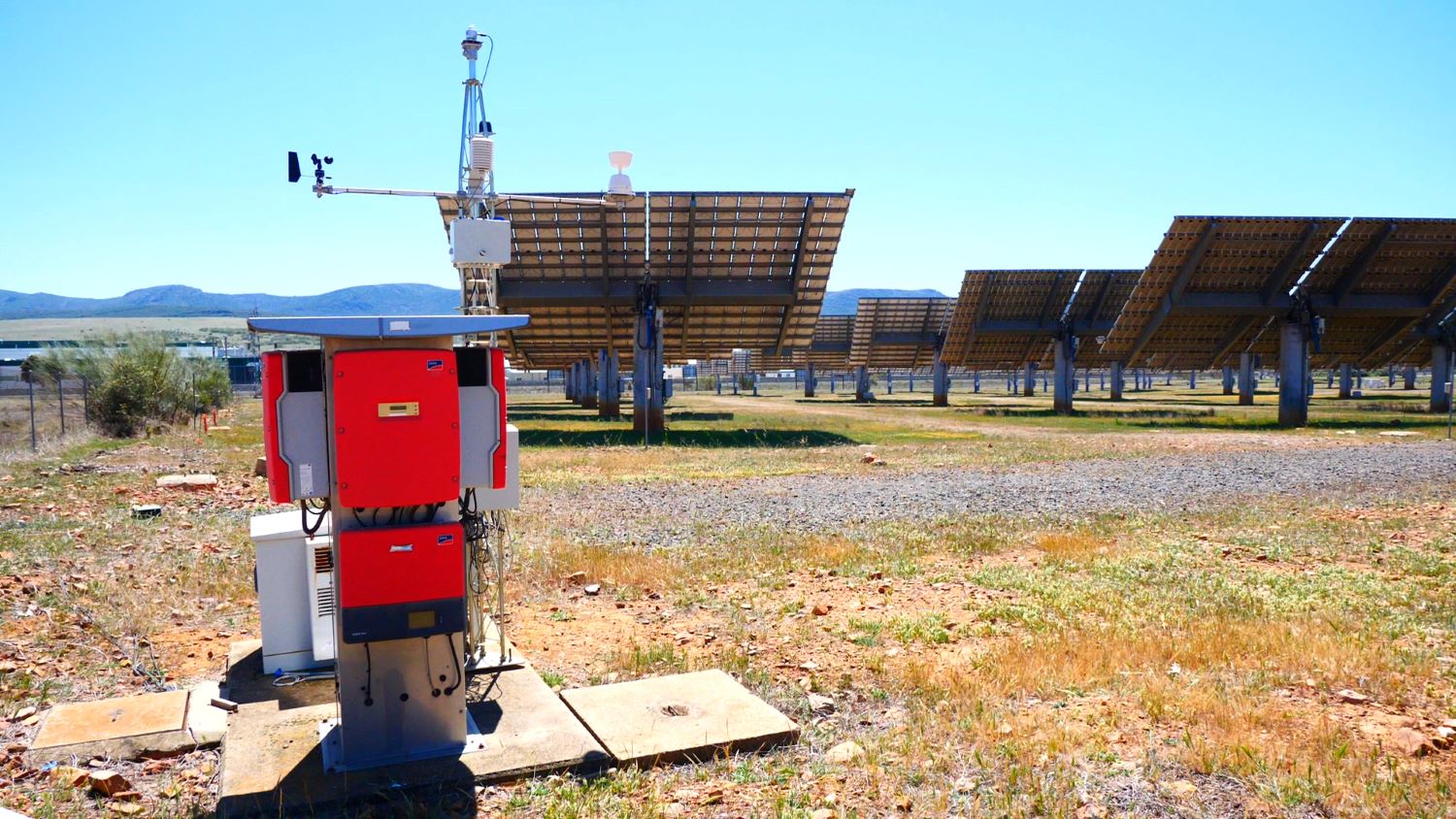
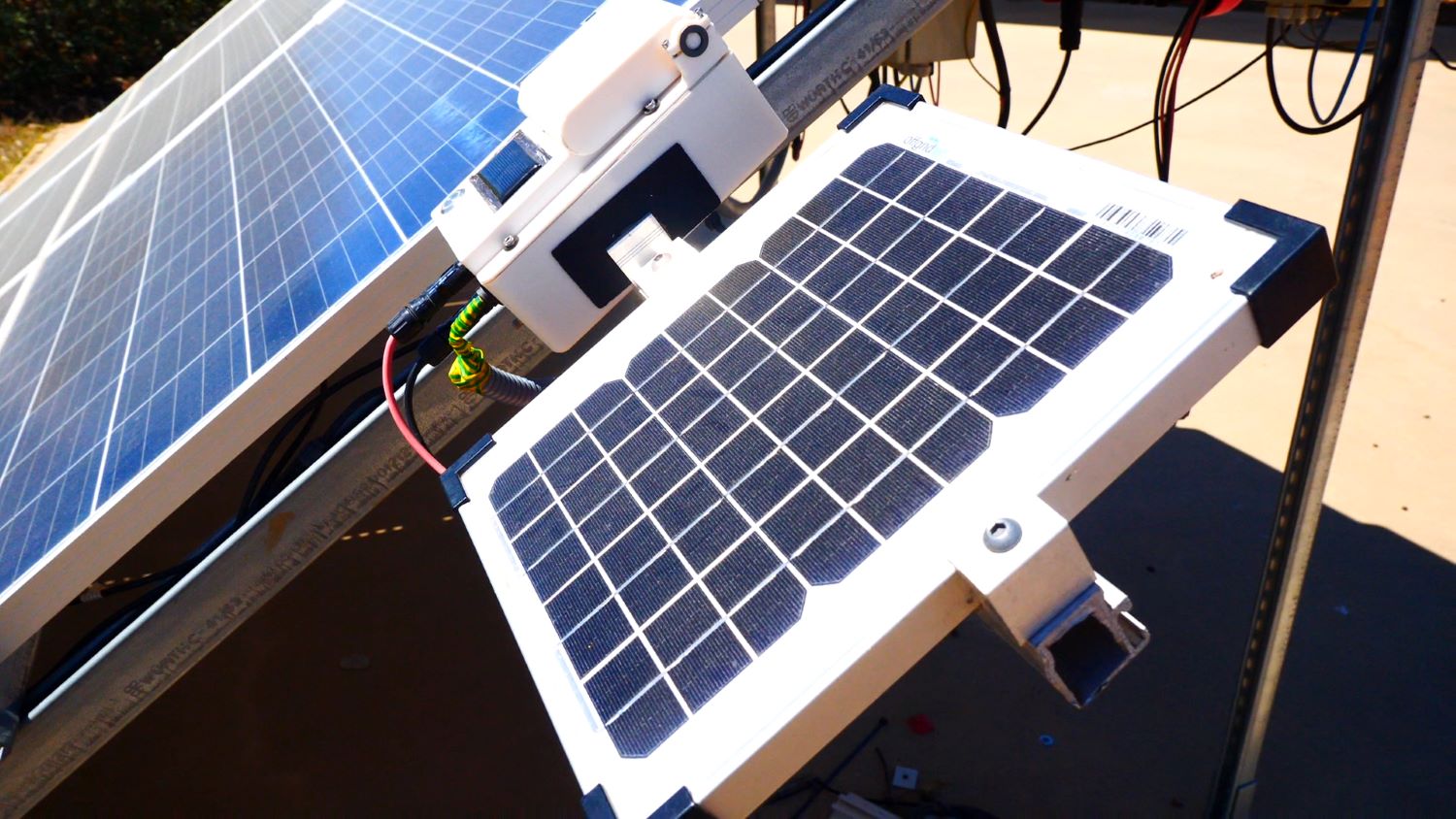
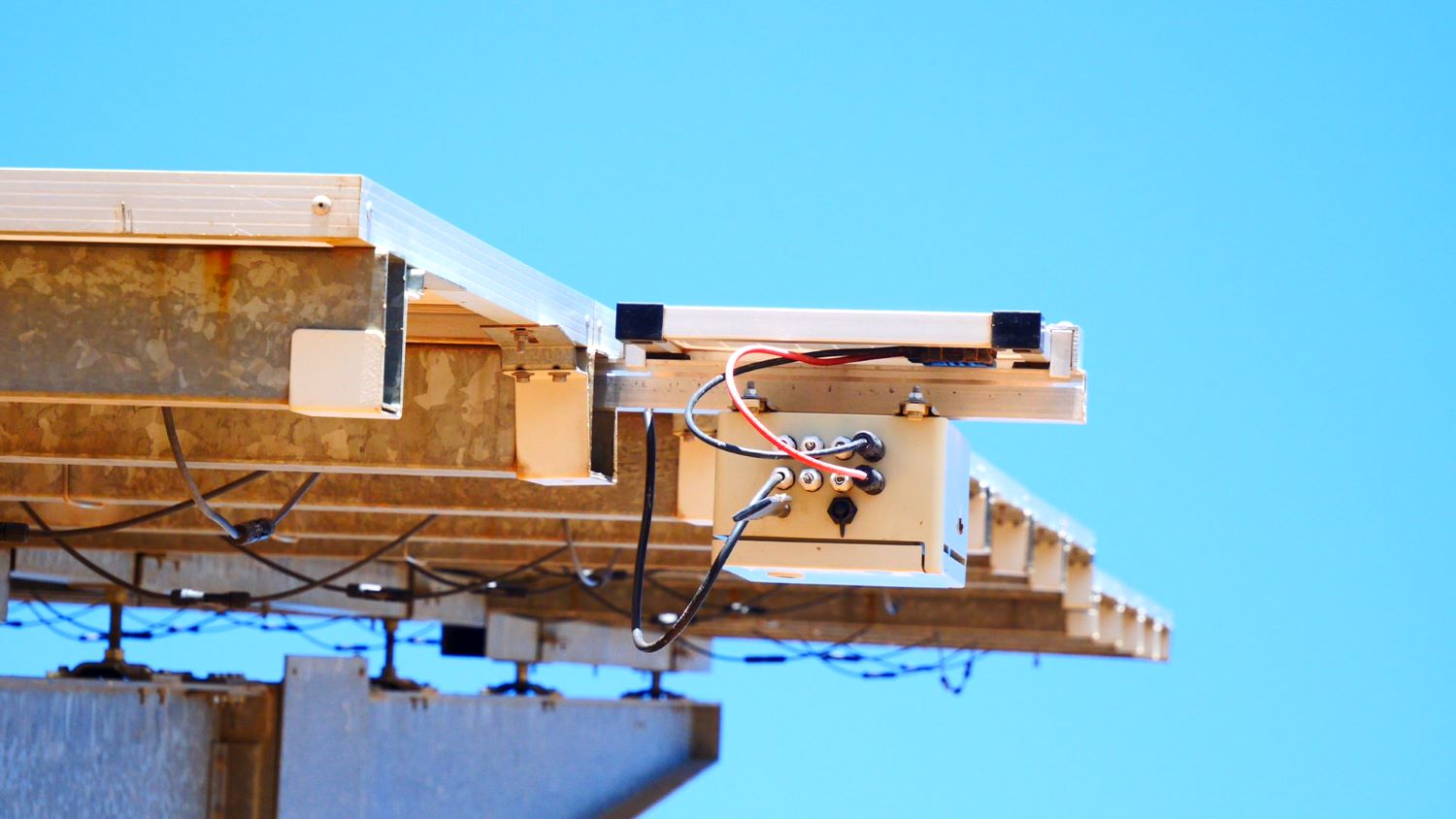
Comprehensive monitoring of the photovoltaic plant: A network of IIoT sensors has been designed and deployed to collect both production data and operational information from photovoltaic systems. These sensors have been integrated with data from additional devices, such as weather stations and soiling sensors. In addition, access has been provided to all data generated by the SCADA system. The collected information is reported to the centralised platform for processing.
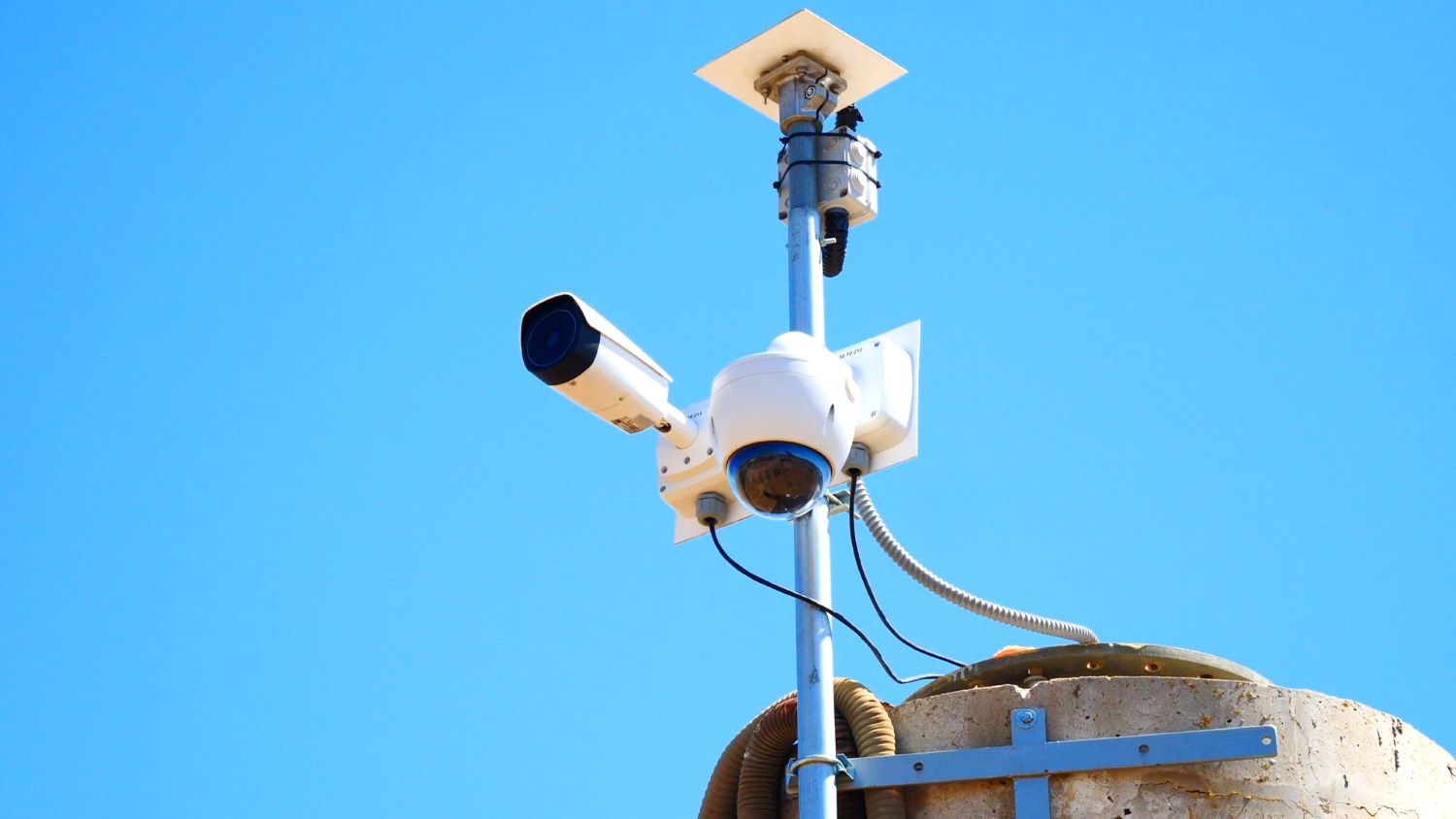
Fault detection and classification through computer vision: Using a thermal imaging camera and a visible-spectrum camera, whose images are processed using computer vision, Artificial Intelligence, and Deep Learning techniques, the system is capable of detecting a range of issues before they have a direct impact on photovoltaic production, including hotspots, dirt accumulation, broken cells, among others.
Short- and long-term solar resource forecasting: Through the use of a sky camera installed at the ISFOC facilities, which analyses cloud movement, together with information from the IIoT sensor network and the integration of Open Data portals, the system estimates meteorological conditions that are essential for optimising the use of solar resources and planning maintenance operations across the plant.
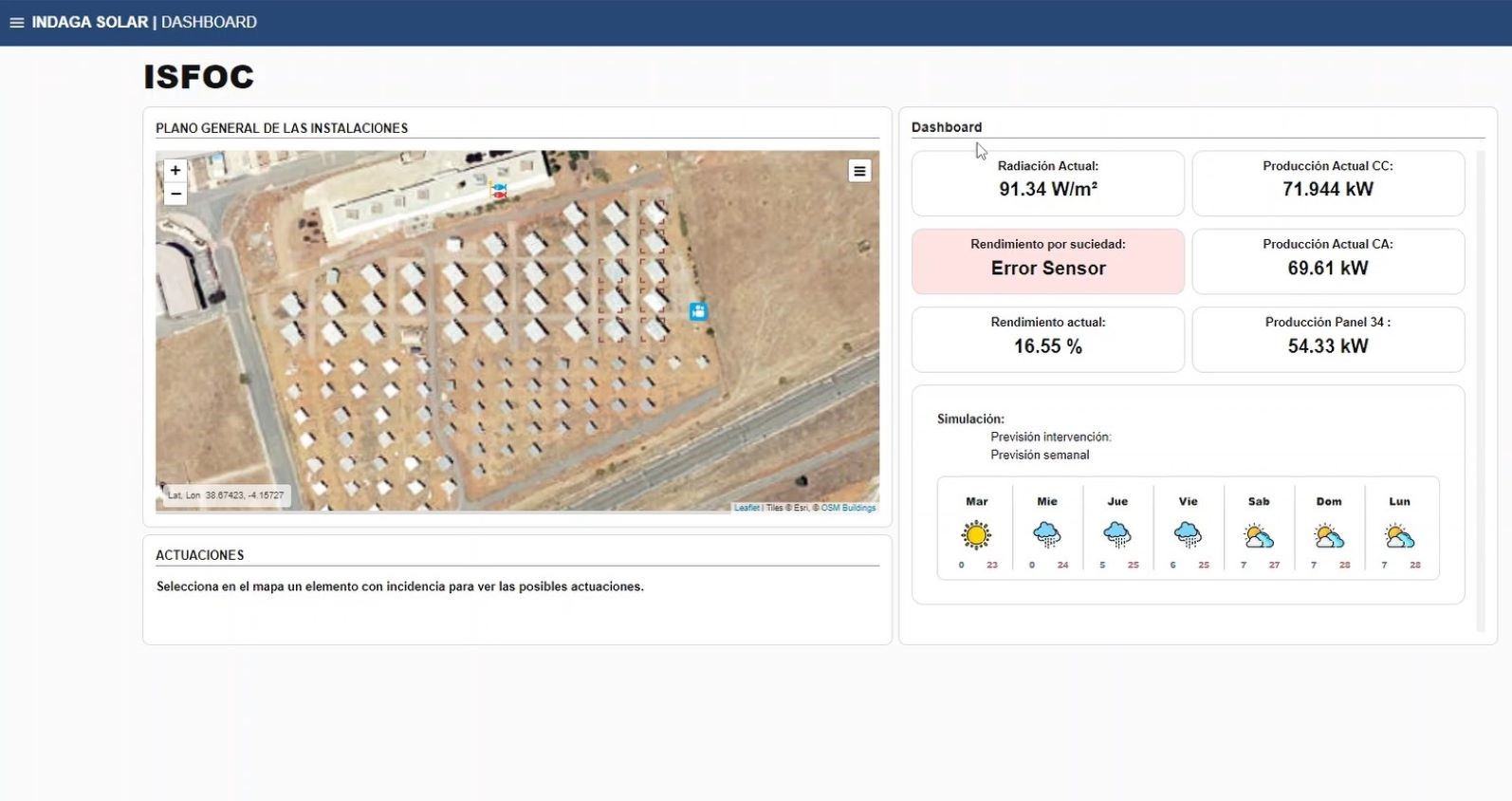
Decision Support System: A centralised software platform enables the orchestration, interpretation, and visualisation of data together with cloud-based, Artificial Intelligence-powered Decision Support System (DSS) modules. The system is designed to optimise and automate the interventions carried out at the plant, while also determining the optimal timing for maintenance activities.
Benefits
- Real-time monitoring of information from all elements of a photovoltaic power plant through the implementation of IoT technologies.
- Successful application of computer vision techniques to detect defects on the surface of photovoltaic panels.
- Artificial Intelligence-driven insights to predict the optimal timing for maintenance activities.
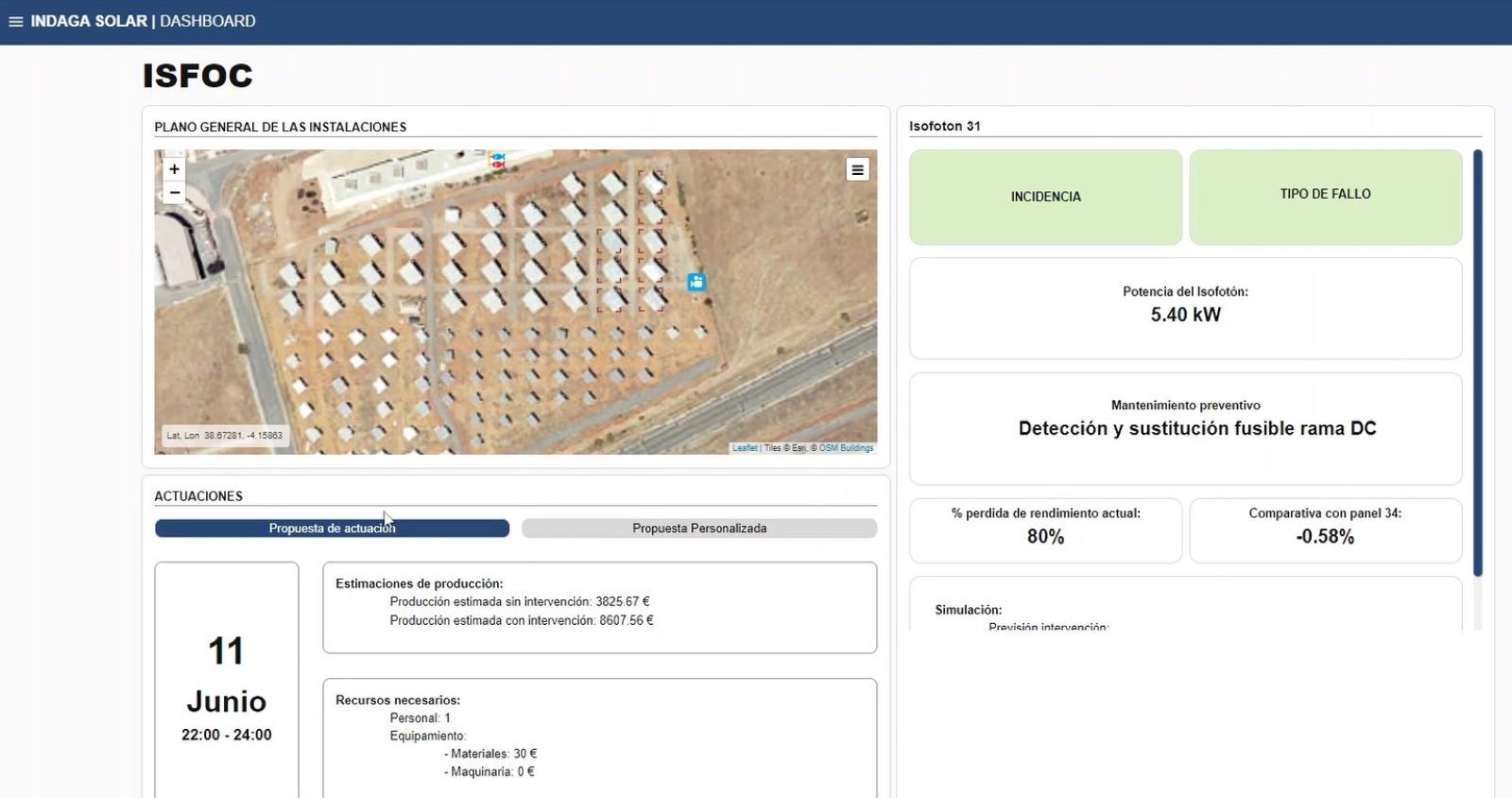
- A web-based dashboard providing complete operational information and recommended actions, accessible anytime and from anywhere.
Financing
The INDAGA SOLAR project was developed under the Spanish national AEI-MINECO programme between 2022 and 2023, with a budget of 99.312 € allocated to Skylife Engineering and a total consortium budget of 323.831 €, supported by 80% grant funding.
Why Skylife?
At Skylife Engineering, we lead projects through our extensive expertise in the integration of advanced technologies and our strong commitment to sustainability in aviation. We work closely with every project manager, following a rigorous process of continuous review and improvement. This approach ensures the delivery of high-quality, safe, and effective solutions that create a real and lasting impact across the industry.


-
SectorEnergía / Fotovoltaico
-
ScopeNacional
-
CallAEI – MINECO (Agrupaciones Empresariales Innovadoras)
-
ReferenceAEI-010500-2022b-224
-
Project Duration2022 – 2023



